


A Beginner's Guide to Island Birdwatching: Best Times, Kit and Etiquette
Islands suit birds, and that suits anyone who likes watching them. A scrap of coast in the path of migration can turn up more species in an hour than a whole inland county manages in a day. You do not need expensive kit or years of practice to enjoy it: a decent pair of binoculars, a field guide and the patience to stand still will get you a long way. What follows is aimed at your first few trips — what to carry, when to go, where to stand, and how to watch without doing harm.
Start with binoculars that suit you
Binoculars are the one piece of kit worth spending on. The two numbers on the box tell you most of what matters: the first is magnification, the second is the diameter of the front lens in millimetres. An 8x42 is the classic all-rounder — bright, easy to hold steady, with a wide field of view that makes it simpler to find a bird that will not sit still. A 10x42 shows more detail but shakes more in a coastal wind and narrows what you can see at once.
Try before you buy, ideally outdoors. A shop doorway is no place to judge a pair. Check that the image snaps into focus with a small turn of the wheel, that the eyecups sit comfortably against your face without black edges creeping in, and that the whole thing does not feel like a brick after ten minutes. Good second-hand glass usually beats new cheap glass. Add a wide neck strap, a lens cloth and something waterproof to pull over the binoculars when a squall arrives.
A short kit list
- Binoculars, 8x42 or 10x42, plus a strap you can wear for hours
- A printed field guide you can keep in a pocket
- Notebook and pencil — pencil still writes in the rain
- Waterproof jacket, warm mid-layer and a hat that will not blow away
- Water, and sun cream on the bright days when the wind hides the heat
- A phone with a tide table, charged and in a waterproof pouch
A spotting scope and tripod are a real advantage for waders and seaducks on a big estuary, but they are heavy and they tie you to one spot. Borrow one for a day before committing.
Field guides, apps and a notebook
A field guide is still the fastest way to learn. Choose one with clear illustrations and range maps covering Britain and Ireland; the Collins Bird Guide is the standard many people end up with, but any well-organised guide will do. Keep it in a pocket rather than a rucksack, and get into the habit of looking at the bird first and the book second. Flicking through pages while a wader walks away is the most common beginner's mistake.
Phone apps are handy for calls and for a second opinion, but they get things wrong, and birdsong played through a phone speaker rarely sounds like the real thing. Use them to check an identification, not to confirm one you already doubt.
Carry a notebook. Write down the date, place, weather, tide and what you saw, and note the behaviour as well as the name: was the bird bobbing its tail, feeding in the surf, flying on stiff wings? Within a season, those notes become a guide to your own island, and they will serve you better than any list of ticks.
Timing: seasons, tides and the time of day
Spring
From March to May, passage migrants move through and breeding birds return. Seabird colonies fill up from April, so cliff ledges that looked empty in winter are crowded by late spring. Early mornings are loud, busy and worth the alarm.
Autumn
August to October is the big season. Huge numbers of birds move south and west, waders pause on estuaries to refuel, and a night of easterly winds and rain in September can drop migrants into the first hedgerow they meet. Headlands, coastal gardens and caravan sites are all worth a look the morning after.
Winter
Wildfowl, divers, grebes and large wader flocks gather in sheltered bays and estuaries. Puffins, guillemots and most terns have left the cliffs, but the rocky shore stays busy with turnstones, purple sandpipers and rock pipits.
The day itself
Dawn is best for songbirds; the last two hours of daylight are often good for waders and wildfowl. On the coast, though, the tide usually matters more than the clock. Around low tide, mudflats and rocky shores are exposed and feeding birds are spread out. At high tide, waders gather at roosts — easier to see, and easier to disturb.
Where to look on an island coast
- Headlands and sea-watching points: find shelter behind a wall or rock, then scan the water steadily rather than sweeping about.
- Rocky shores: good for turnstone, rock pipit and, in winter, purple sandpiper.
- Sandy beaches and strandlines: sanderling running ahead of the waves, ringed plover on the upper shore.
- Estuaries and mudflats: the richest habitat of all for waders and wildfowl.
- Cliffs and offshore stacks: nesting seabirds in summer — watch from well back from the edge.
- Hedgerows, gardens and campsites just inland: where tired migrants land first.
Watching without disturbing
Respectful watching comes down to one principle: give birds more space than you think they need, and let them decide how close you get.
- Use binoculars instead of your feet. Optics let you stay at a distance and see more.
- Never push a roost or a feeding flock. If a bird stops feeding and stares at you, you are already too close.
- Keep dogs on a lead around shorelines and clifftops, or leave them at home during the breeding season.
- Skip playback recordings. They cost birds energy they need, and they can pull birds away from nests.
- Between roughly March and July, avoid approaching nests, and do not photograph or handle young birds.
- Some species have extra legal protection against disturbance. If you are unsure, ask the local wildlife trust or the relevant country's nature agency before you go looking.
- Stay on paths, close gates, take litter home, and do not cross land without permission.
- Be careful about posting exact locations of rare breeding birds online.
Your first morning out
- Check the forecast and the tide table the night before. Save the strong winds and big seas for another day.
- Tell someone where you are going and when you expect to be back. Take a charged phone, a warm layer and water.
- Walk out to a headland or a quiet stretch of shore in the half-light and find somewhere comfortable with a clear view.
- Sit still for twenty minutes. Birds settle around a stationary person far more readily than one who keeps walking.
- Scan slowly. Identify what you can, note what you cannot, and resist chasing every bird.
- Log your best few records afterwards. Local bird clubs and county recorders rely on sightings from exactly this kind of morning.
Take care on coastal paths, which can be slippery and undermined, and never walk a tidal causeway without knowing when the water returns. Start small, go often, and the island will keep showing you more.
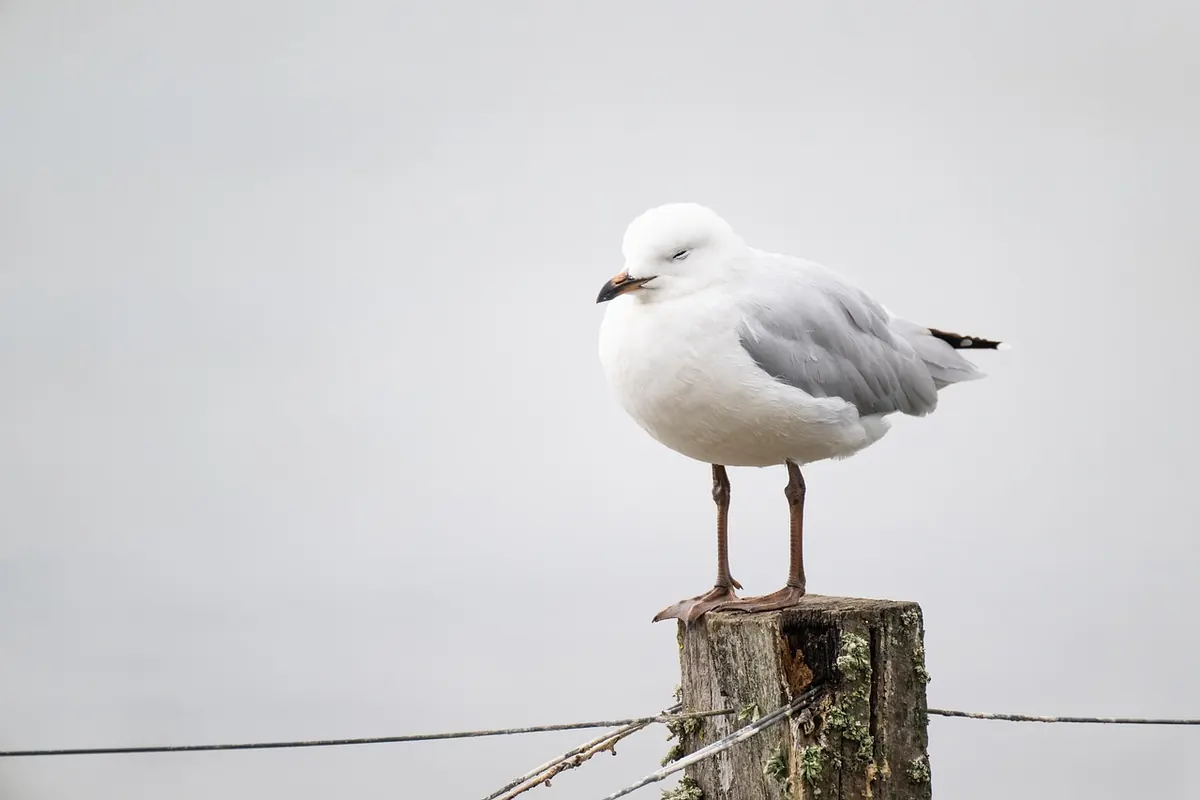
Photo: pen_ash / Pixabay